 Facebook
 X
 Threads
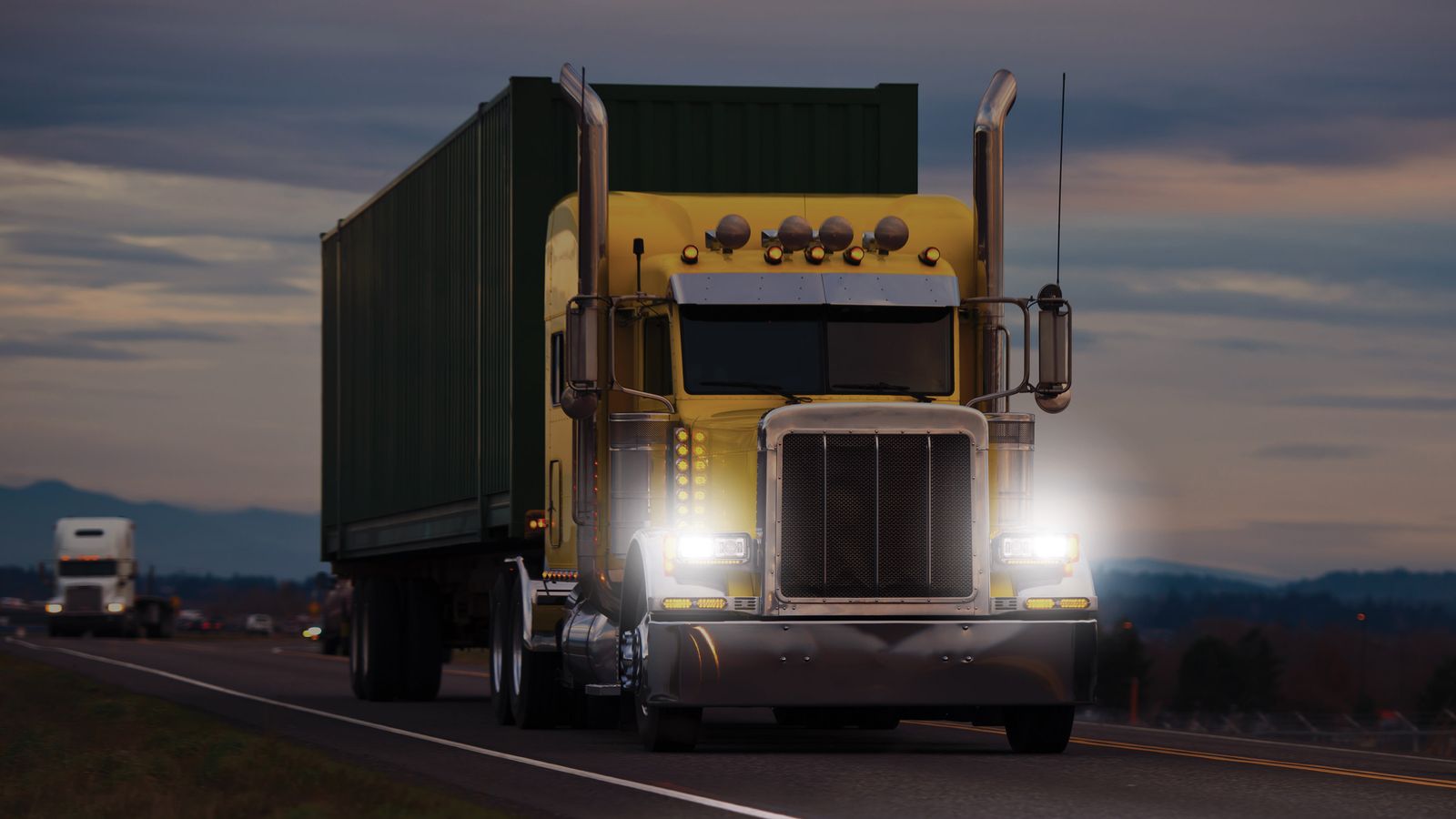
If you supply lights or other parts to OEMs and the aftermarket, you carry that burden on every product. Your engineers do the hard work of meeting the standards, choosing the connectors and matching the mounting points. Then the product has to show a buyer, at a glance, that it will fit and that it's built to the rules. When it doesn't show that, the buyer moves on to a part that does, even if yours is the better product.
In our work for manufacturers, fit and compliance are where industrial design does some of its most practical work. The outside of a product is where a buyer and an installer see whether it belongs on their vehicle.
WHAT BUYERS AND INSTALLERS EXPECT
Buyers and installers want a part that fits their vehicle without any changes. It has to be the right size, use the mounting points and the connector the vehicle already has, and meet the safety standards for that vehicle, such as the DOT and ECE standards for headlights. If a part has to be modified to fit, or doesn't meet those standards, they'll buy a different one.
In many categories, the fit is set by a standard opening that every competitor shares. When a major truck-lighting brand launched its 4x6 LED headlight system, it sold it as a drop-in replacement for the 1A1 and 2A1 sealed beams already on the road [1]. In a category like that, every serious product drops into the same opening. Buyers won't consider a product that doesn't, so a drop-in fit has to be there from the first concept, and the rest of the design has to set your product apart.
In other markets, the hard part is the number of different vehicles. SEMA's research describes crossovers as still underserved by the specialty aftermarket, because with more than 100 mostly low-volume models, it's "hard to justify tooling-up" for each vehicle [2]. A supplier who can make one product fit many vehicles reaches buyers that others leave alone.
THE RULES A BUYER CAN'T SEE
Lighting makers carry an extra burden. A compliant headlight is tested as a complete system against the federal lighting standard, FMVSS 108. Meanwhile, LED bulbs that are not approved as halogen replacements sell widely online, many claiming DOT or SAE compliance they don't have, and a lighting retailer's blog reports that the federal safety agency has largely stepped back from enforcing against them [3]. The maker that pays to comply competes on the same product page as the one that doesn't, and the buyer can't see the difference.
That puts two jobs on the design. The first is to protect the compliance your engineers have already earned, by leaving the certified parts exactly where they are. The second is to make the product look like what it is: a part built for the vehicle and built to the standard.
HOW INDUSTRIAL DESIGN HANDLES FIT
Industrial designers call one part of this work product semantics. It means the form of a product tells the user which way it faces, where it mounts and how it works, before anyone reads the instructions. A flat back, for example, tells an installer that the light mounts flush, and a face that matches the opening shows the part was made for that vehicle.
KAIA's industrial designers work on fit in three ways.
WE DESIGN TO THE STANDARD
We design the part to fit the openings, mounts and connectors that vehicles in your market already use.
WE COVER EVERY VERSION
One design works for every vehicle and connector your buyers need, so you don't have to design each version separately.
WE LEAVE THE CERTIFIED ENGINEERING ALONE
We shape the outside of the part without moving the components that already meet the safety standards.
FIT ACROSS A WHOLE PRODUCT LINE
Fit gets harder as a product line grows. A headlight may need a heated version, a work light may need a second connector, and a lamp family may need a mount for another class of vehicle. Each new version is a chance for the fit to drift: a heater cut that changes a wall, a connector that changes the back of a housing, or a bracket that only works on one vehicle.
When one design covers every version from the start, each new version inherits the fit of the first. Your engineers don't have to solve the same mounting problem again for every variant, and your dealers get a consistent family of parts they can recommend with confidence for a whole fleet.
FOUR MARKETS, FOUR KINDS OF FIT
JW Speaker makes lights for heavy trucks, motorcycles, forklifts and farm and construction equipment. My team designed a product for it in each of those markets, and each one had to fit its vehicles in a different way.
HEAVY TRUCKS: A FACE FOR THE STANDARD 4X6 OPENING
JW Speaker's Model 8800 is a 4x6 LED headlight for heavy trucks. It drops into the openings built for 1A1 and 2A1 sealed beams, uses an H4 plug, runs on 12 to 24 volts, and fits Peterbilt, Kenworth, Freightliner and Western Star models [4]. Its optics were already laid out to meet the DOT and ECE standards: one large projector over two small projectors, with an optic on each side. We designed the new face around that layout without moving a single optic, so the compliance carried through all eight versions, including the heated versions with their own cut in the bezel.
POWERSPORTS: A CUSTOM FIT FOR ONE FAMILY OF MOTORCYCLES
JW Speaker's first adaptive motorcycle headlights were round. Victory touring motorcycles use a diamond-shaped headlight, so the round lamps couldn't serve Victory riders. We designed the bezel for the Victory version around JW Speaker's existing optics, housing and lens, shaped for the diamond-shaped opening. JW Speaker's motorcycle market sales manager, at the Victory launch: “a custom fit and plug & play installation with this dynamically advanced technology.” [5]
MATERIAL HANDLING: ONE HOUSING, TWO CONNECTORS, MOUNTED FLAT
JW Speaker's brief for its forklift work light asked for two versions of the same light, one with a 2-pin connector and one with a 3-pin connector. We designed one housing that takes either connector, with the connector and the mounting stud on the back. The flat back sits against the truck, so the light stays low and out of the way, and the shape tells the installer at a glance how it mounts. JW Speaker sells it as the Model 710 Low Profile LED Warehouse Work Light, in both connector versions [6].
AGRICULTURAL AND OFF-HIGHWAY EQUIPMENT: A MOUNT THAT WORKS ON MANY VEHICLES
Every vehicle fits a light differently: where it sits, how it mounts and how much room it has. For a new 90mm lamp that combined two of JW Speaker's existing lamps, the brief asked for a mount that could carry over to other new lamps. We drew a center pedestal that works under the lamps or above them, with the same housing and bezels either way up. JW Speaker's released Model 93 offers single and double pedestal mounts, and its pedestal mount brackets "can be positioned at 90° intervals for maximum mounting flexibility" [7]. JW Speaker sells the Model 93 for agriculture, construction, mining, rail and other uses.
THREE QUESTIONS TO ASK ABOUT YOUR NEXT PRODUCT
Before a new product goes to tooling, put three questions to the design.
First, will it go on every vehicle it's sold for without an adapter? List the openings, mounts and connectors your buyers already have, and check the design against each one.
Second, did any certified part move? If the answer is yes, the product may need new testing. If the design shaped only the outside, every version keeps the compliance your engineers already earned.
Third, does the shape tell the installer how it mounts? A flat back, a bracket that turns or a face that matches the opening lets a buyer see the fit before opening the box. A part that shows how it fits is easier to choose and easier to install, and the proof is in how JW Speaker sells these lights: as drop-in replacements, as plug and play, as low-profile lights that mount flat, and with brackets that turn in 90-degree steps to suit each vehicle.
SEE IT IN YOUR MARKET
You can see how this worked in each market in our case studies: heavy trucks, powersports, material handling and agricultural equipment. If your next product has to fit a range of vehicles and meet the rules for each of them, let's set a 30-minute call to walk through the vehicles it has to fit.
Jon Levy, CEO, KAIA
REFERENCES
- Heavy Duty Trucking, "Truck-Lite Releases 4x6 LED Headlight System," May 5, 2015. https://www.truckinginfo.com/products/truck-lite-releases-4x6-led-headlight-system
- Chris Main, "SEMA's 2026 Future Trends Report Shows Optimism Despite Global Headwinds," THE SHOP, May 27, 2026. https://theshopmag.com/features/sema-2026-future-trends-report-automotive-aftermarket/
- John Tobias, "Are LED Headlight Bulbs FINALLY Legal in 2026?" Better Automotive Lighting, March 18, 2026. https://blog.betterautomotivelighting.com/are-led-headlight-bulbs-legal-in-2026/
- Raney's, "JW Speaker 4" x 6" LED Evolution 2 Projection Headlight Model 8800." https://www.raneystruckparts.com/jw-speaker-4-x-6-led-evolution-2-projection-headlight-model-8800
- LEDinside, "JW Speaker Debuts Dynamically Adaptive Motorcycle Headlight for Victory Motorcycles," December 23, 2016. https://www.ledinside.com/products/2016/12/jw_speaker_debuts_dynamically_adaptive_motorcycle_headlight_for_victory_motorcycles
- JW Speaker, "Warehouse LED Work Light, Model 710." https://www.jwspeaker.com/products/forklift-work-light-model-710/
- JW Speaker, "90mm LED Headlight, Model 93." https://www.jwspeaker.com/products/90mm-headlights-model-93/