 Facebook
 X
 Threads
Time is short for most product launches. A new product usually gets one show to make its case. Your buyers walk the hall looking for new products, and they check what you tell them.
A HALL FULL OF ANNOUNCEMENTS
At AERO Friedrichshafen in April 2024, about 680 exhibitors competed for roughly 31,500 visitors. The Aircraft Electronics Association calls its own convention "the primary launching pad" for new avionics. Most aviation shows work the same way. Companies hold their news for the week the buyers are in the room.
The buyers come for that news. Research from the Center for Exhibition Industry Research found that about 80 percent of exhibition attendees come to find new products and vendors. Attendees also rank the chance to talk with experts near the top of what they want from a show.
The attention is there. The problem is on the exhibitor's side. Most aerospace companies launch a product with a marketing team of one or two people. The engineers who know the product best talk in watt-hours per kilogram and thermal limits. Buyers want to know what the product lets them do. And in this industry a claim that runs ahead of the engineering does more damage than a quiet launch. Aerospace buyers have watched certification schedules slip for years, and they read every line for overreach.
HOW WE BUILT THE EPIC 2.0 PRODUCT LAUNCH
In early 2024, Electric Power Systems, a Utah company that makes battery systems for electric aircraft, was eight weeks from AERO with a new product to announce. EPiC 2.0 was the next generation of its energy storage system. My team at KAIA built the launch around it, from the film and the press release to the website updates and the brochure for the booth.
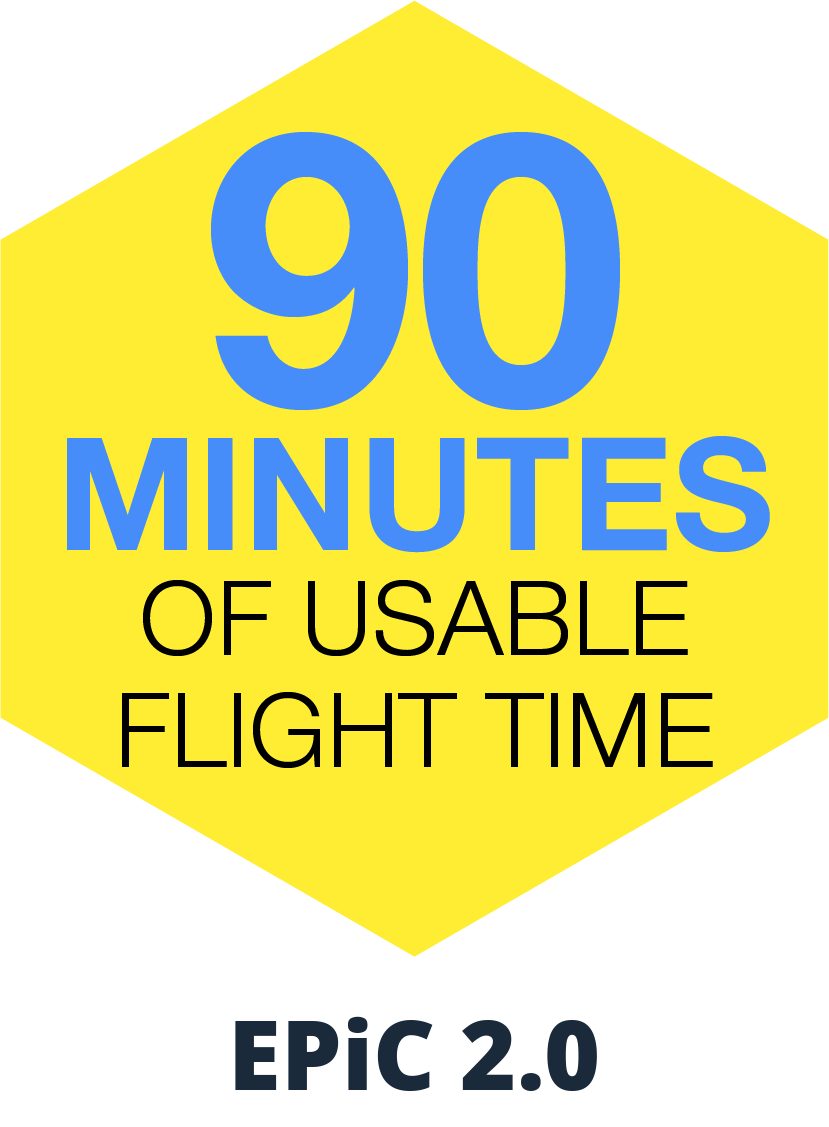
We started with the engineering. At the kickoff, the EPS team named the one thing their buyers cared about most: time in the air. Flight time limits which missions an electric aircraft can fly. The new module stored more energy for its weight. At launch, EPS rated EPiC 2.0 for more than 90 minutes of usable flight time with a 30-minute reserve, against 60 minutes for EPiC 1.0.
That rating became the core of every piece. Each line of the story had to trace back to it, or to another fact the engineers had specified. The higher energy density was one. The connector and cooling designs that manage heat inside each module were another. A third shaped a message of its own: EPiC 2.0 was designed as a drop-in replacement for EPiC 1.0. That meant a customer could buy the current system now and upgrade later without redesigning the aircraft. The film's script ended on that idea, and the press release carried it near the top.
Next we went to find the words. For one week in March, our director filmed on site in Utah. He shot the production floor, each product on a turntable, the hangar, the aircraft on the ramp and the buildings from the air at sunrise and sunset. We interviewed ten people. Seven worked at EPS, from the chief executive and the chief technology officer to the engineers who lead energy storage and high-voltage protection. Three came from outside the company: the director of the Utah Department of Transportation's Division of Aeronautics, a Utah Valley University professor who trains pilots, and a local business owner who has sold electric cars for more than a decade.
Those interviews supplied the language for everything else. The chief executive's line, "This really unlocks electrification for so many different customers in so many different segments," opened the press release and the first teaser post. The professor explained the extra time in terms any flight school understands: "The average duration of a local training flight is just over an hour. So having one hour plus capacity makes that feasible." The chief technology officer described the moment partners understood the design: "It's exciting to see the light bulb turn on where they see how this is going to help them."
The website and the brochure showed the same comparison. On the product page, EPiC 1.0 and EPiC 2.0 sat side by side, with the flight time of each drawn as a graphic and the specifications listed underneath. The trifold for the booth carried the same chart, so a buyer who had read the website saw the same numbers in the same order at the show.
Then we ran everything to one date. A clock on the EPS home page counted down to April 15. Four teaser posts ran on April 5, 8, 10 and 12, each one ending on the date. The brochure went to the printer on April 10. The release went out on Business Wire on April 15, two days before AERO opened, and Urban Air Mobility News ran it the next day. By the time the show began, the story buyers would hear at the booth was already in the trade press.
The story kept working after the show. General Aviation News ran the professor's quote in May. Utah Business quoted the chief executive later that month. In August, four months after AERO, AOPA published its own article on the new system, quoting the chief executive, the professor and the chief technology officer. The footage from that week in March kept feeding EPS's social posts through September.
WHAT WE LEARNED
FIND THE ONE MEASURE BUYERS USE, AND BUILD ON IT
Every aerospace product has a long specification sheet. Buyers compare products on a few measures they already know. For an electric aircraft battery, that measure is time in the air. Once the EPS team named it, we built the film's main graphic and the release headline on it. Then say what the number lets buyers do. Ninety minutes on its own is a figure on a page. The launch film put it in terms a pilot or an operator could picture: with the extra half hour, the area of airports within reach more than doubles. Ask your engineers and your sales team which number buyers ask about first, and build the launch on that number.
START FROM WHAT THE ENGINEERING SPECIFIED
The interviews were how we found the story, but the engineers' specifications set what the story could say. Every claim in the EPiC 2.0 launch traced to a specification the engineers stood behind. The drop-in upgrade message came straight from the module's design. When the story starts from the specification, the marketing team never has to defend a line the engineers would question.
RUN EVERYTHING TO ONE DATE
A product launch has more pieces than a small team can manage on separate schedules. We tied every piece to April 15 and the show that followed, and each piece sent buyers to the next. The teasers said to come back on April 15. The posts during the show asked buyers to schedule time at the booth. The posts after it linked to the release and the product page. The release landed while the industry's attention was on that one event.
PLAN THE SHOOT FOR THE WHOLE YEAR
The week of filming cost more than any other part of the launch, so we planned it for months of use. We filmed the facility, the people, the products and the aircraft, in addition to what the launch film needed. That footage carried EPS's social posts from June through September. Before you film for a launch, list what you will need to show six months later.
CHECK EVERY CLAIM THE WAY YOUR ENGINEERS WOULD
In aerospace a product is certified or it is not. Integrity in a product launch is that specific. The EPS release said plainly that EPiC 2.0 was in safety-of-flight development and said when it was expected to be available for flight. Trade editors repeated the release's lines as written. Have the engineer who owns each number read every line that uses it, before anything goes out.
WHY BUYERS TRUST THE ENGINEERING
The people who choose aerospace products are often engineers themselves, and they trust other engineers. The Edelman Trust Barometer asks people how credible they find information about a company, depending on who delivers it. In its 2018 survey, more than 60 percent rated a company's technical expert extremely or very credible. Only 44 percent said the same of the chief executive.
The quotes trade editors chose to repeat from the EPiC 2.0 release were the ones about what the system does: the training flight that fits in an hour, the partners who saw how the design would help them.
Before you plan your next product launch, ask the engineer who owns the product to tell you, in one sentence, what it does that nothing else in its class does. Build the launch from that sentence.
Jon Levy, KAIA