 Facebook
 X
 Threads
If you run a visitor center, a museum, a historic site, a refuge or a presidential library, you probably came to this work because a place like that once reached you: a park you explored as a kid, a museum you walked through with a parent, a story that made history feel like yours for the first time. Now the job is to give that moment to someone else.
Day to day, the job looks different. Review cycles, budget requests, equipment that breaks, a small staff, and visitors who give you a few minutes before they move on. The media you inherited covers the whole subject and keeps it at a distance, and people walk past the screen. When visitors leave without caring, the place gets harder to fund and easier to close.
Most agency media is made to get through review. We make it for the person in the room and source it well enough that review is easy, and people give it more attention than anyone planned. We give them a story they belong to; people protect what they feel part of. I've spent thirty-some years making films, visualizations and exhibits, for studios and for NASA, the FAA and DARPA, and a project my Emmy Award-winning team at KAIA built for the Bureau of Land Management is the latest proof.
ONE CENTER, ONE HILL
BLM has run the National Historic Oregon Trail Interpretive Center, outside Baker City, Oregon, since 1992, and about 2.4 million people have visited. Baker City raised the money in the 1980s that built it, and the orientation film tells that story too. The center closed in November 2020, stayed closed through a $6.5 million energy renovation, and reopened in May 2024.
The reopening gave the center a chance to renew its media: the orientation film in its theater, on a 16-foot screen, and three films on 80-inch screens in the open galleries. Like most public places renewing their media, it wanted a film about its own ground, a presentation as polished as the place itself, and films sized to the time visitors give them.
BLM asked for a site orientation film and three new gallery films. Their goals: convey the historical importance of the Oregon Trail, illustrate the natural beauty and significance of the Flagstaff Hill site, elevate the presentations throughout the center, and streamline visitor flow through better durations. KAIA was the prime contractor. We researched, scripted, filmed and finished a 17-minute orientation film and three gallery films, all in 4K. Every script cleared BLM's public affairs review.
HOW WE MAKE MEDIA FOR A PUBLIC PLACE
Seven ideas shape every film we make for a public place, including Flagstaff Hill.
PUT THE VISITOR IN THE STORY
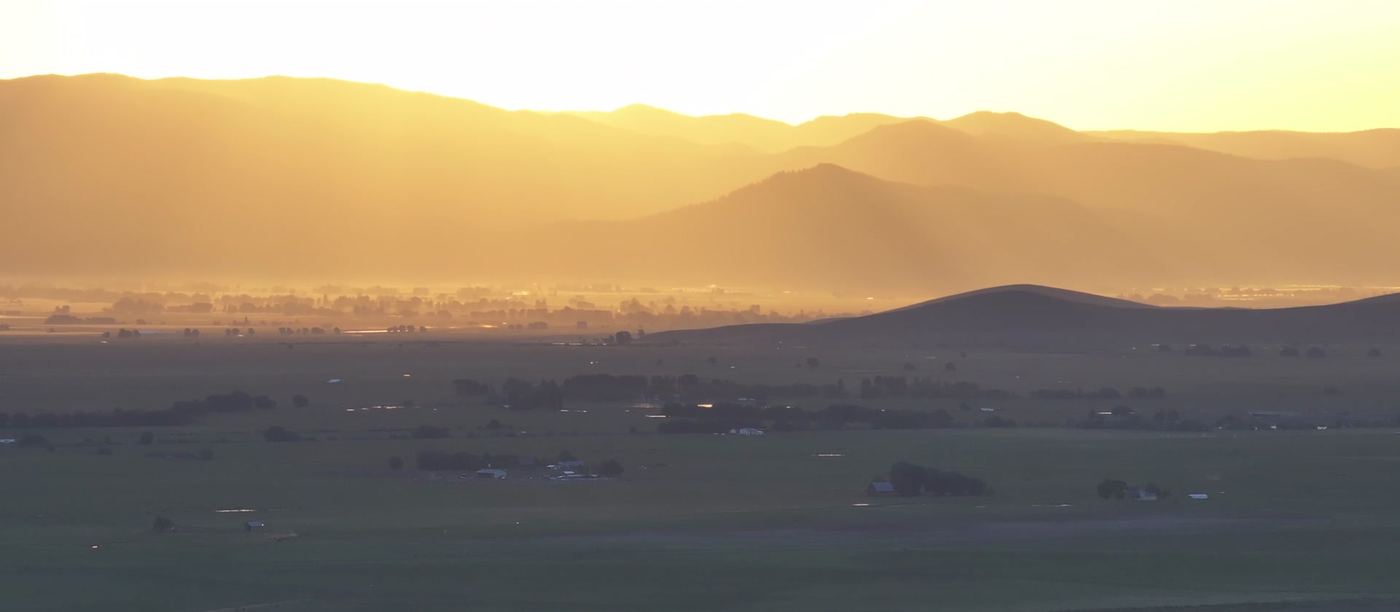
People give their attention to a story that includes them. Flagstaff Hill is where emigrants got their first view of the Powder River Valley, and visitors stand in the same spot. The orientation film opens on the hill, filmed from the ground and the air, then traces the route from Missouri to Oregon on GIS (geographic information system) relief maps and returns to the hill. Visitors see what the journey asked of the families who made it, then learn that the ruts outside were cut by those wagons. The ground becomes part of their history. That's the moment you're after, a kid at the window asking who made the ruts. At a museum, the same idea starts with the object in the case and the hands that used it; at a presidential library, with the room and the decisions made in it.
LET THE PEOPLE INVOLVED SPEAK, AND SOURCE EVERY WORD
First-person voices hold attention, and sourcing makes them safe to use. A narrator and the emigrants' own journals and letters carry the film. We traced every first-person account to its source and changed the period language only enough for a modern listener. Live shots of a hand writing journal entries with a quill tie those voices to the page they came from. Every public place has its own voices: the soldier, the builder, the ranger, the family who farmed the valley.
WRITE IT TO BE REVIEWED
A late question from public affairs costs another round. The orientation script went through five drafts with center staff and a site historian, the gallery scripts went through four, and we logged the source behind every claim as we wrote. When public affairs asked whether the first-person dialogue came from historic documents, the answer was already in the file. Review becomes a quick check, and your staff's time goes back to the visitors.
PUT EVERYONE WITH A STAKE IN THE STORY FROM THE FIRST MINUTE
The people who were there first, or who live with a place's story, recognize it as theirs when they're in it from the start. The trail was a road long before the wagons, worn over thousands of years by Native peoples. The film starts with them and keeps them alongside the emigrants. At the center's reopening in May 2024, Roberta Conner, executive director of the Tamastslikt Cultural Institute of the Confederated Tribes of the Umatilla Indian Reservation, said her people "still regard our more than six-million-acre homeland as ours." At other places it's the town nearby, or the veteran who wants his unit's story told right.
SHOW WHAT NO CAMERA RECORDED
Much of the trail was never photographed. We used the newest AI tools to bring archival photographs, paintings and engravings to motion, to create period scenes in the style of 1800s photographs where no image exists, and to restore archival images to 4K for a 16-foot screen. A senior creative director guided every shot and reviewed it for accuracy, taste and respect for the history. Every collection has that gap somewhere, whether it's a battle no one filmed, a valley before the dam or a town before the fire. We fill it the same way.
LET ATTENTION SET THE LENGTH
We size each film to the attention its story can hold and the room it plays in. BLM first asked for an orientation film of 9 to 12 minutes. The finished film runs about 17, and the curator told us visitors don't notice the length because the film holds them (BLM does not endorse KAIA). The gallery films do the opposite job. Each is a page from a wagon master's journal (leaving Independence, crossing the Snake River, claiming land in Oregon) and runs under two and a half minutes, short enough to watch standing.
END WITH WHAT TO DO NEXT
We end every film by pointing visitors to the next stop. The orientation film closes by sending visitors outside to the trails through sagebrush and grassland, the view from the top of the hill, the wagon display and the ruts. They walk out to stand in the history they just watched.
TAKING THE RISK OUT OF A PUBLIC FILM
A film the public sees at a federal site has to satisfy historians, tribal partners, public affairs, a fixed budget and the equipment in the room. We work through those risks with the POET method: political, operational, economic and technical.
- Political. We map the review chain at kickoff and build the story from the record. Every script cleared review, and BLM leadership approved the films.
- Operational. The center is a working museum with one theater, open galleries and a small staff. We delivered the full project files and raw footage, so the next exhibit or AV upgrade can build on the same research.
- Economic. The work ran on a small purchase order with no budget for a costumed cast. Maps, aerial footage, the archive brought to motion and a few live quill shots carry the story.
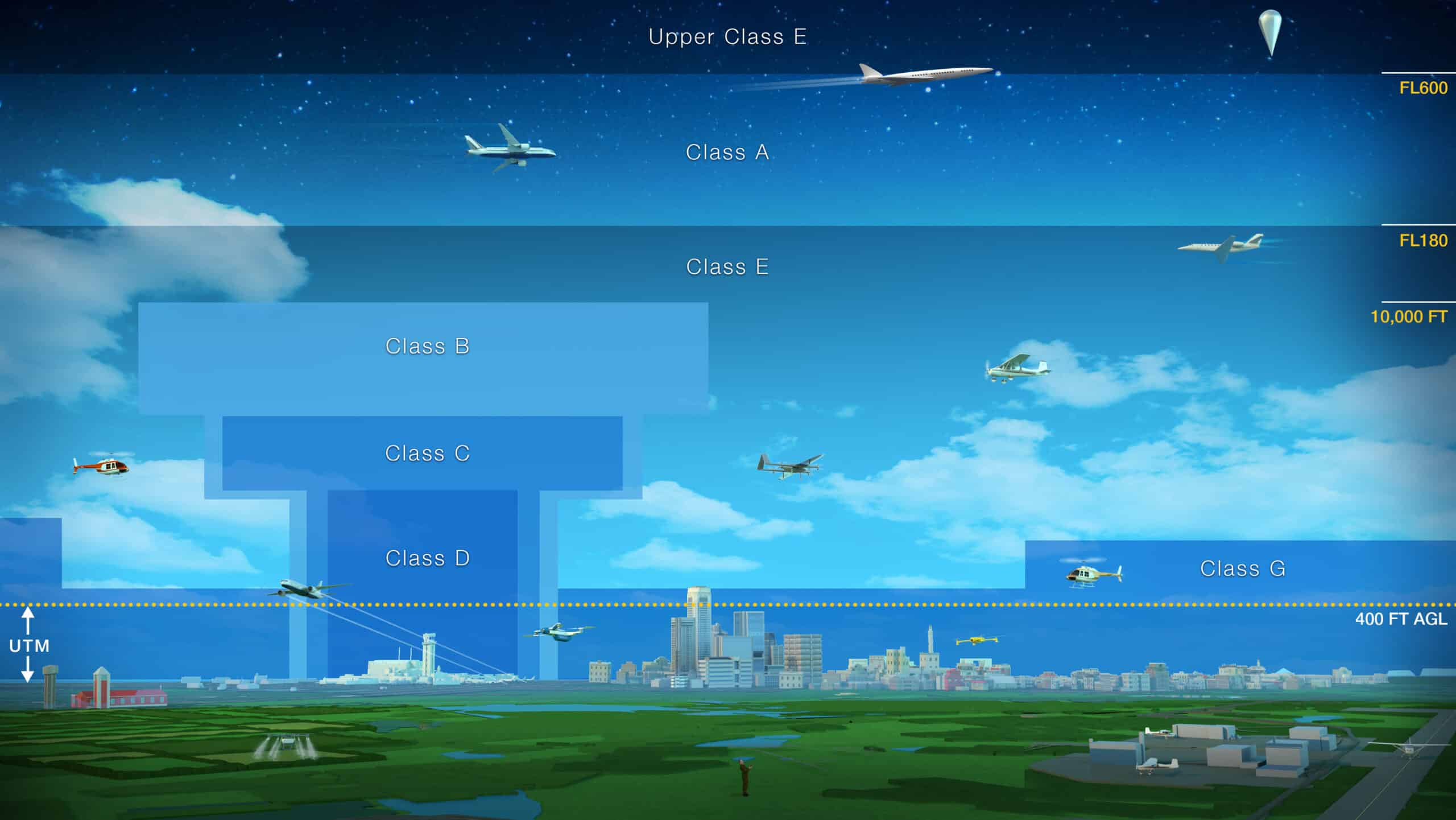
- Technical. The films play on a 16-foot main screen and 80-inch gallery screens, and the center sits in an airport's controlled airspace. We mastered every film in 4K, and the drone flew under an FAA authorization arranged before the shoot.
INTERESTINGLY, WHAT DRAWS QUESTIONS IN REVIEW IS OFTEN WHAT HOLDS AN AUDIENCE
In review, the hardest questions land on a voice from the past, a hard chapter, or the people who were here first. On Flagstaff Hill, that was the emigrants' own words. We source those parts first, so they survive review and reach the screen.
YOUR NEXT FILM
Planning new media for a public place?
Let's set a 45-minute call about what your place holds and what your visitors see now.
Jon Levy President and CEO, KAIA